
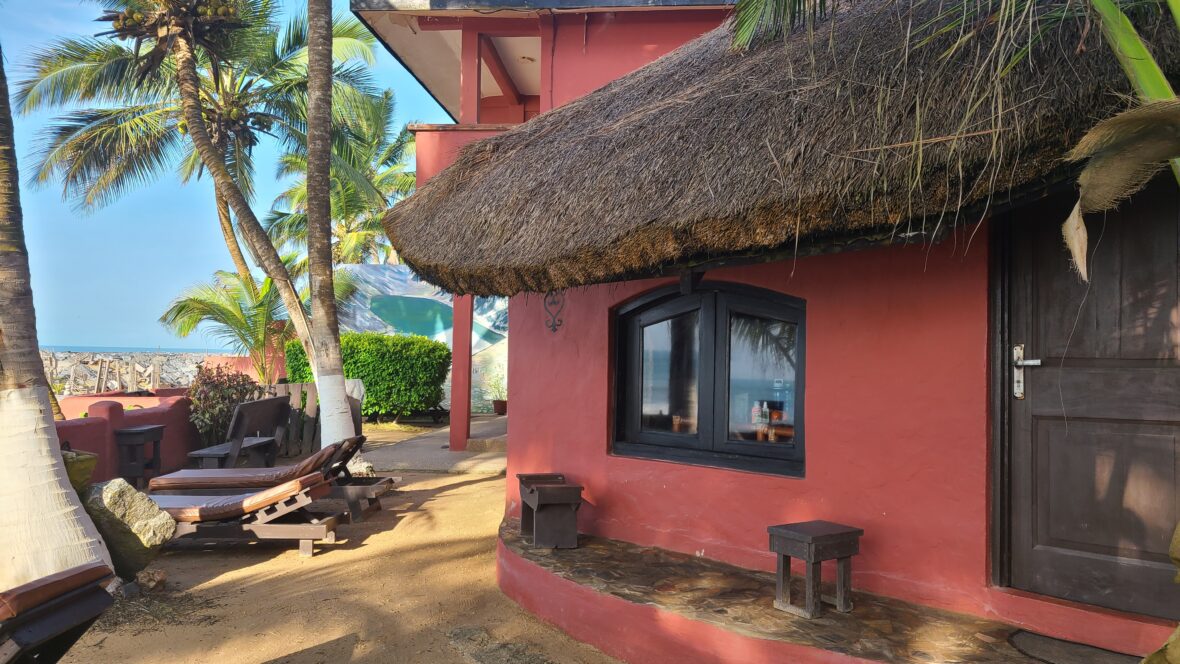
Pictured is the hut that has been my home for the last two nights, having spent a weekend exploring the beauty and history of Cape Coast. The setting was idyllic, a beachside resort with sun loungers, good food and entertainment from the inevitable troupe of drummers and acrobats. Cape Coast is a tourist destination and it all felt very different from the authenticity of Kokrobite, where we are emphatically accepted as part of the community, rather than as white tourists to be pestered for money in exchange for cheap souvenirs. Nevertheless, it was beautiful waking up to the sound of the sea outside my window.


We Must NEVER Forget
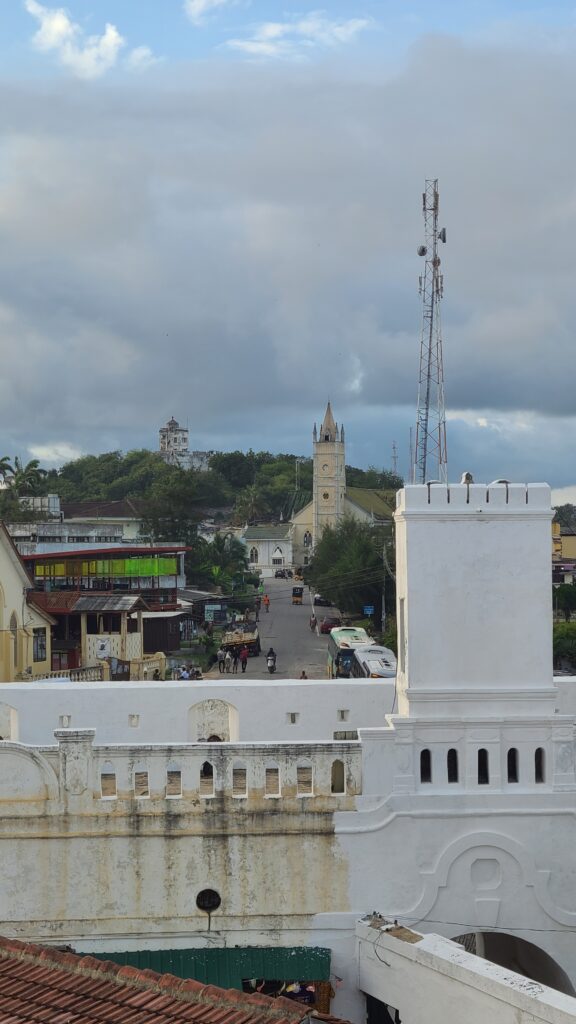
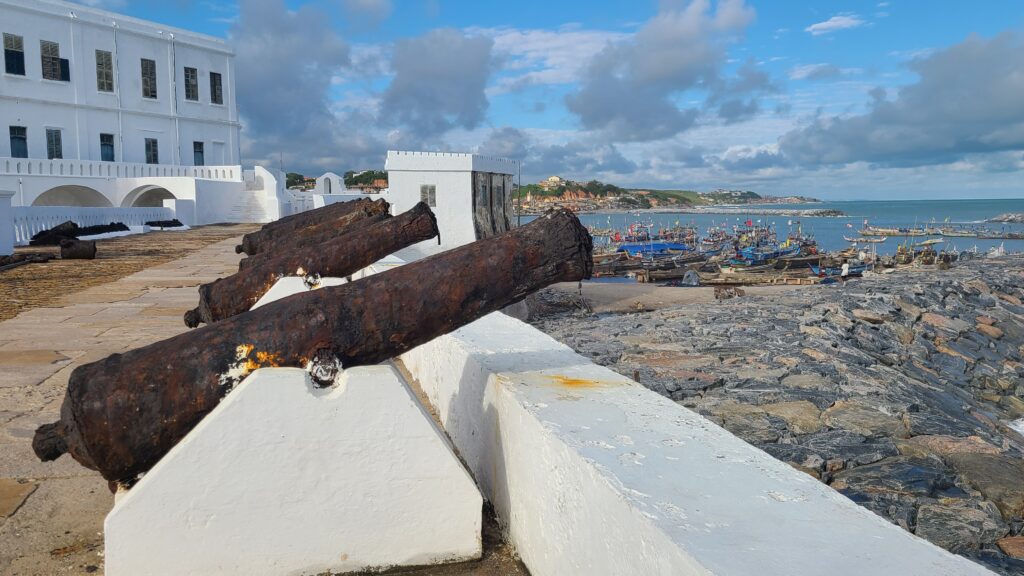
First stop was a tour of Cape Coast Castle, the headquarters of the British Colonial administration for the Gold Coast colony (Ghana’s former name). The castle was originally build by the Swedish in the 1650s, then passed to the Danes and the Dutch, before being taken over by the British in the 1660s. It was originally used to trade gold and timber, but took on an altogether more sinister role when it became the centre for the administration of the transatlantic slave trade – a more lucrative commodity. It remained in British hands until Ghana became independent in 1957.
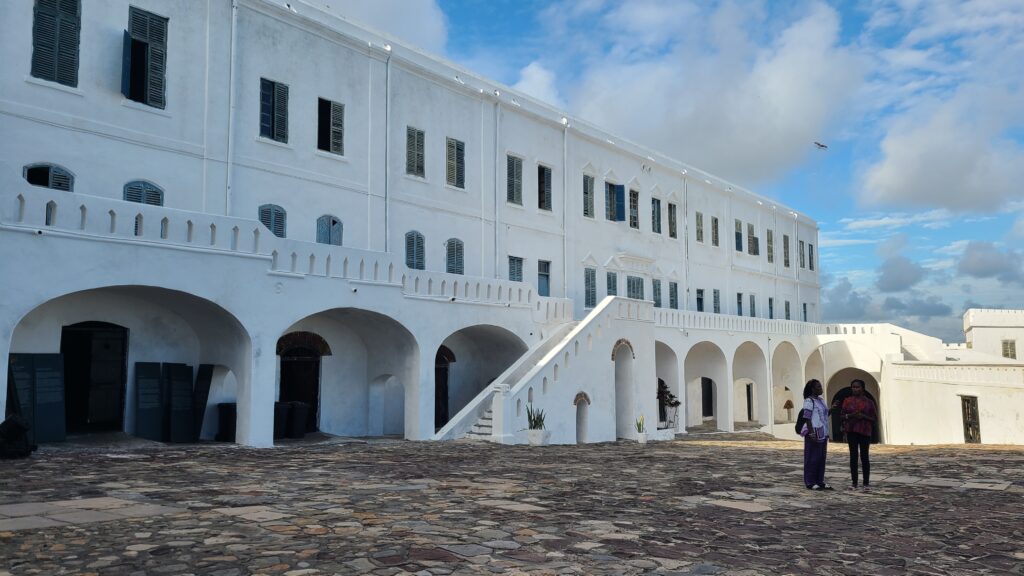
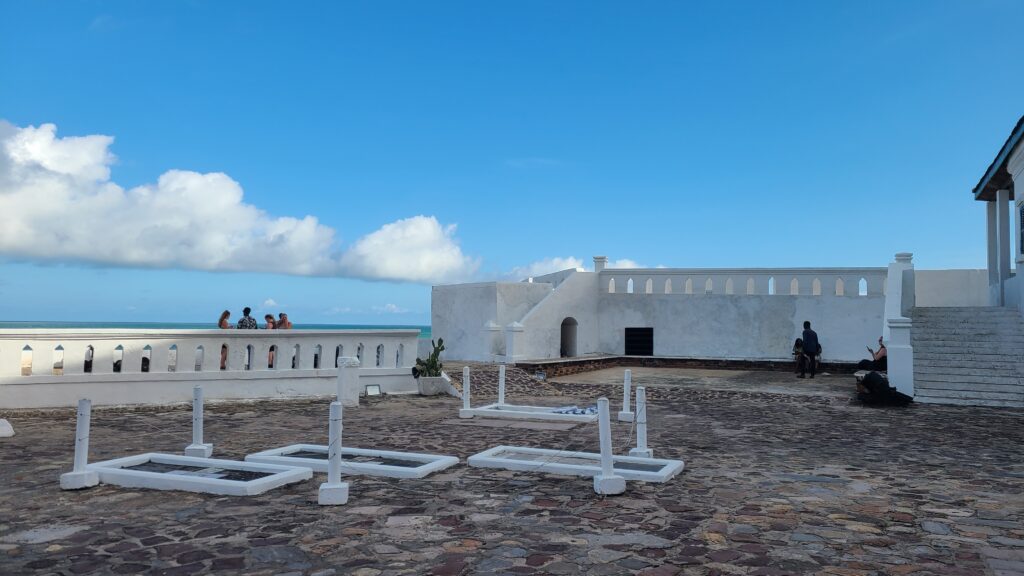
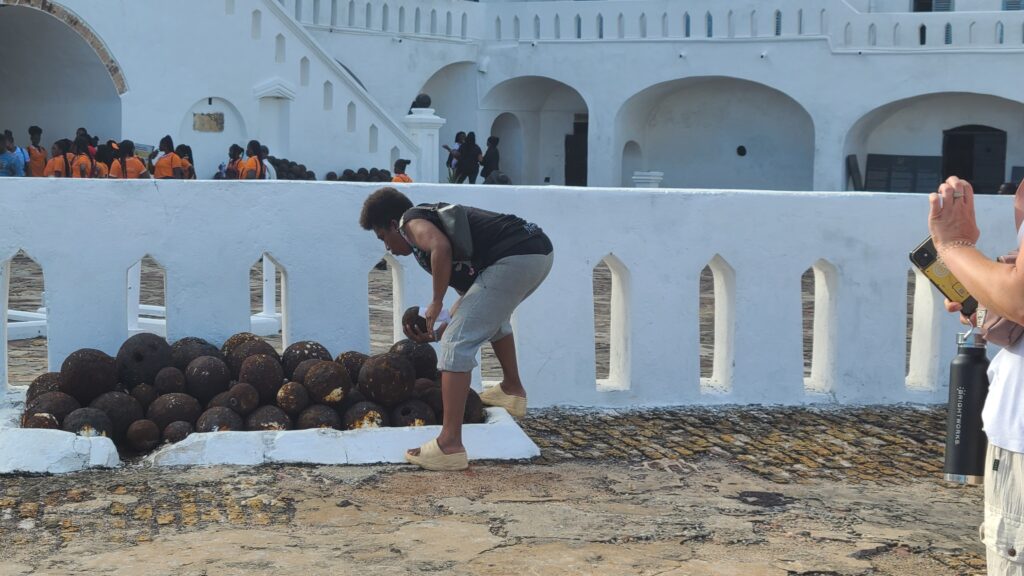
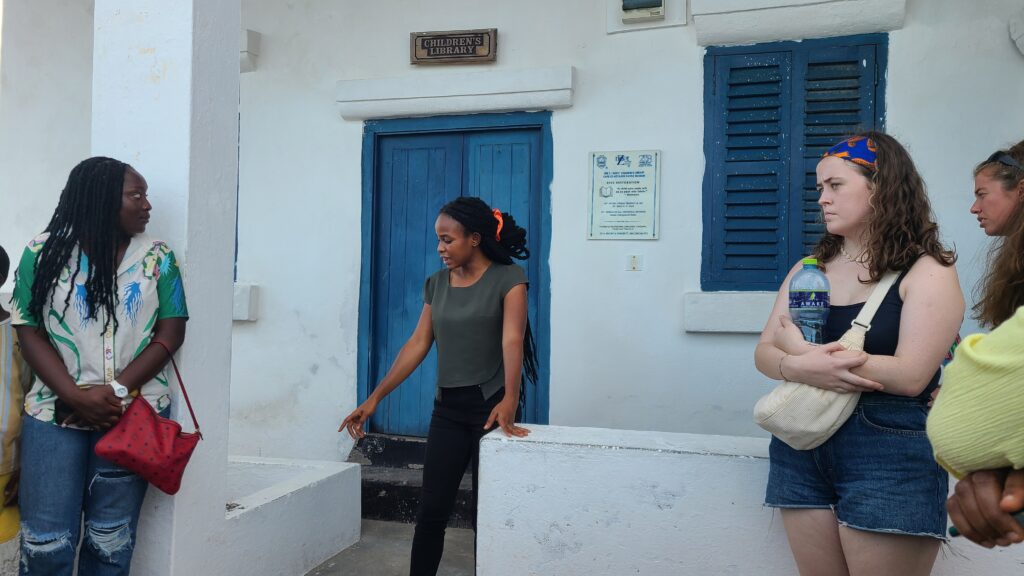
The lady pictured in the final photograph was our tour guide and she took us on a harrowing tour of the slave dungeons, where Africans were held before being transported to America on British slave ships – if they ever made it that far. The dungeons were frightening, no light and ventilation and you could barely begin to imagine the horrific conditions that the captured African people had to endure at the hands of the British in their own country. We saw floors thick with calcified deposits of blood and human ‘waste’ – urine, excrement and menstrual blood. Slaves were kept in small cells, shackled together, unable to lie down, no separate area to go to the toilet and diseases spread quickly. Up to 200 men in the male cells and a similar number in the female ones. When people died they were left to rot until their bodies were removed and thrown in the sea. When the ships arrived the men and women were led down to the sea going through what is now known as the Door of No Return.
The Governor lived above hundreds of slaves, and there was a chapel next to his rooms, and a trap door, where food and water were lowered and the cries and shouts of the men could be heard above. How could these pious slave masters be worshipping God while listening to the suffering that was going on below them?
The Governor had a balcony overlooking the female cells, and when he wanted to satisfy his lust with a female slave he would stand on the balcony and choose his prey. If you were chosen by the Governor you were allowed to take a bath and if you were ‘lucky’ enough to get pregnant you were removed from the dungeon for the duration and for 3 months after birth to breastfeed your child, after which time the children were removed to live and be brought up in a house in the town and sent to ‘castle schools’ and the mother was thrown back into the slave dungeon. This was the start of formal education in Ghana. The Cape Coast school is now a Children’s Library for children who are unable to afford to access public libraries and the castle itself is a UNESCO World Heritage site.
There were lots of Americans in our tour group, many of them African Americans tracing their roots. It was a harrowing visit. I know we can’t change history, but the shame of being British and seeing what our ancestors did, how they treated people like animals in their own land, was horrific. We must never, ever, ever let anything like this happen again, and we must never, ever forget what we did.
We visited another castle/fort on Saturday, Elmina castle. This place is even older than Cape Coast Castle, originally built by the Portuguese in 1482, then captured by the Dutch and later sold to the British, so it became a ‘subsidiary’ of Cape Coast Castle and also used to house slaves. A similar building with similar tales of atrocities. The town of Elmina (and Cape Coast too) has many old colonial buildings.


Dizzy Heights and Big Jaws
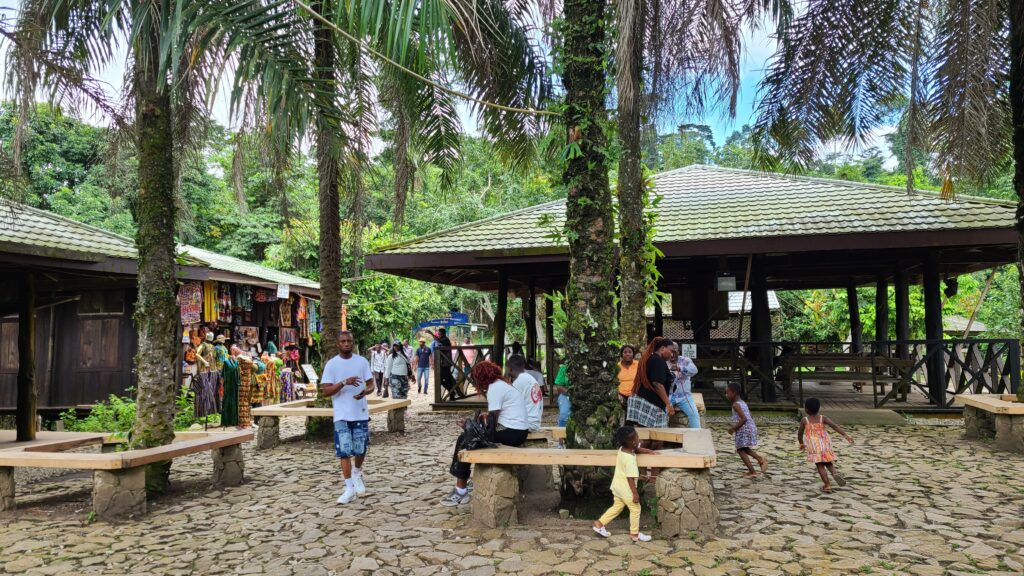
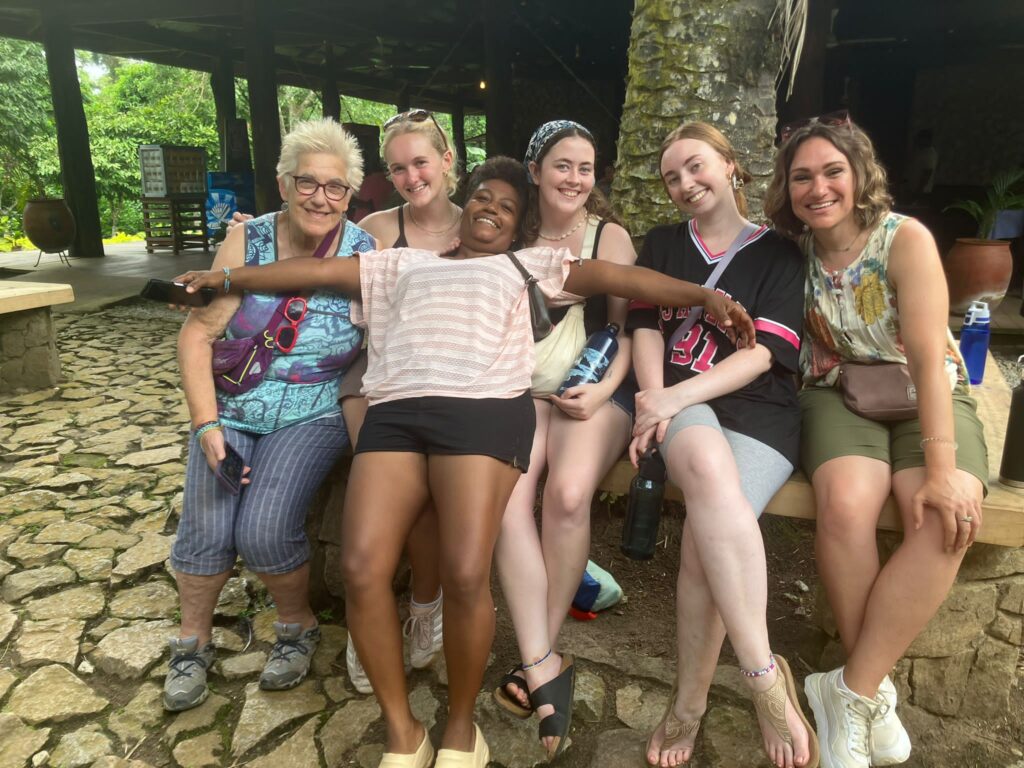
On a lighter note, on Saturday we visited Kakum National Park, which offers visitors “spectacular scenery and a fascinating wildlife experience”. Its claim to fame is 7 suspension bridges which form a 333-meter long canopy walkway, suspended 27 meters above the forest floor from trees that are over 300 years old. It was very scary experience, walking on narrow planks suspended high above a rainforest, but I did it!


However, there was a big BUT…….People are herded along the walkways, all 7 of them, and encouraged to keep moving because you can’t have too many people on each walkway at one time (goodness knows what would happen if you did 😱) so there isn’t really any time to stop and admire the vegetation – and there was no wildlife in sight! Apparently early morning and night-time are the best times to spot wildlife, so I couldn’t help feeling that it had just been an exercise in being suspended above a rainforest. But then I suppose being suspended above a rainforest is not something you do every day, is it?
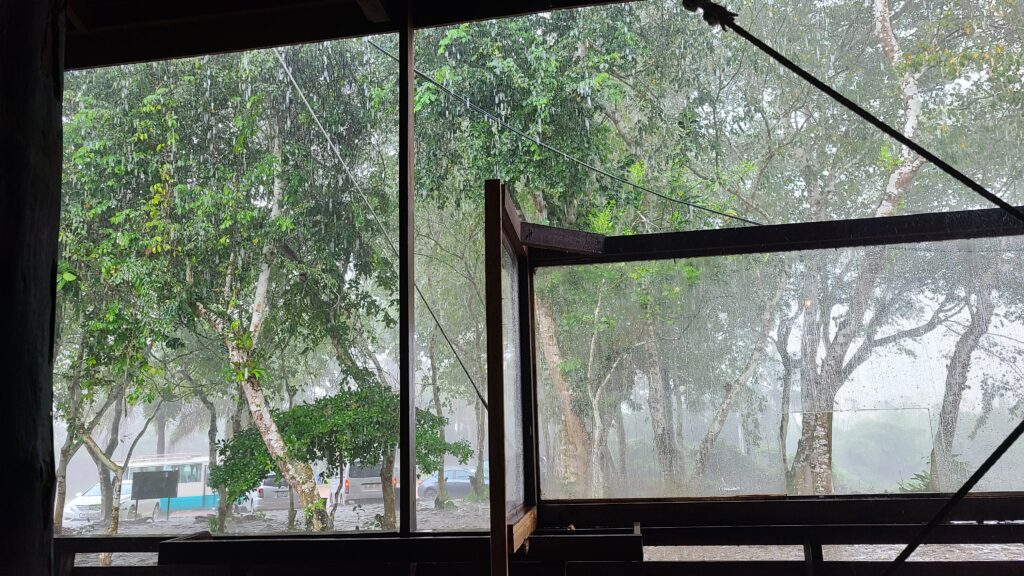
Not sure how well it shows up in this picture, but just to prove we were in a rainforest, as we finished our walk the heavens opened and it rained torrentially for about an hour, which happily coincided with lunchtime!
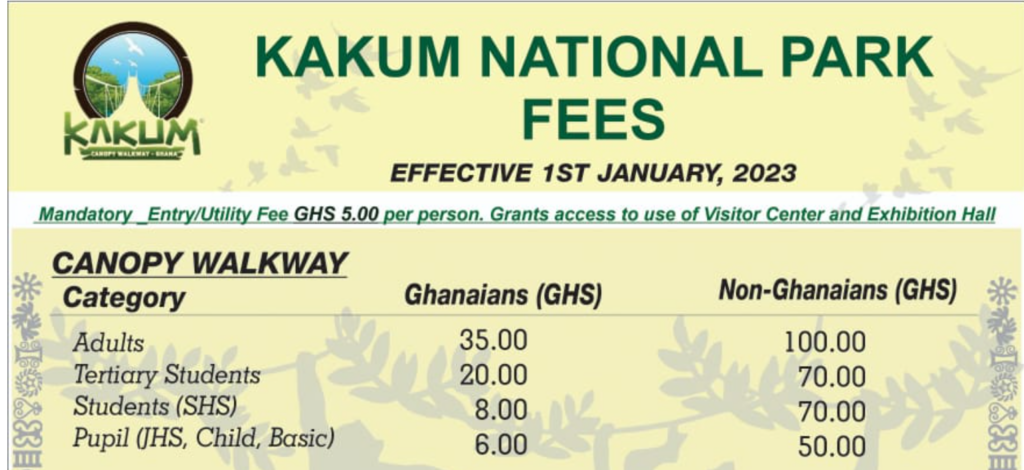
Interestingly, they operate a two-tier payment system here for Ghanaians and non-Ghanaians. Can you imagine attempting to visit a Safari Park, or any other attraction in the UK, and having two different prices for Brits and foreigners?!!
The day finished with a trip to see some crocodiles at a nearby lake – another tourist attraction but at least they were living happily in a natural environment.


The Week Ahead
Hard to believe, but I’m now heading into my final week here. By this time next weekend I’ll be home – and no doubt feeling extremely cold! The week ahead is filled with more breast cancer awareness activities, plus the usual school sessions, and another final round of teacher training on Thursday.
Shwelɛ kpakpa kɛha otsi ni woɔ yibii ni hi jogbaŋŋ ni baa lɛ. (Best wishes for a very productive week ahead).